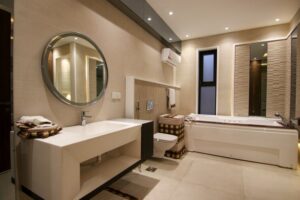


Bathrooms are small rooms with a big job. They get used every single day, which is probably why homeowners are paying more attention to how theirs actually look and feel in 2026.
If you’re planning a refresh, here are the trends genuinely worth knowing about, not just the ones filling up Instagram.
Why Leeds Homeowners Are Rethinking Their Bathrooms
Leeds has a lot of period terraces and converted properties, many with bathrooms that were fitted decades ago and never touched since. Tiles crack, grout blackens, and layouts stop making sense for how people actually live now.
That’s driving a steady wave of renovations across the city and a shift in what homeowners are actually asking for.
5 Bathroom Trends Worth Knowing About in 2026
1. Microcement Instead of Tiles
This is the big one. Microcement Leeds homeowners are choosing over traditional tiling gives a seamless, grout-free finish that’s easier to keep clean and doesn’t crack the way old tiling does.
2. Warm, Earthy Tones Over Cold Grey
The all-white, all-grey bathroom is softening into warmer neutrals — sand, stone, and soft green tones that feel less clinical and more like the rest of the house.
3. Wet Rooms, Even in Smaller Spaces
Wet rooms used to mean a big budget and a big room. That’s changed. Clever drainage and level-access flooring mean wet rooms now work in genuinely small bathrooms too.
4. Floating Vanities and Hidden Storage
Wall-mounted vanities that leave the floor visible make a bathroom feel larger instantly, while concealed storage keeps everyday clutter out of sight without losing space.
5. Textured Statement Walls
One textured or contrasting wall, rather than tiling the whole room in one pattern, is becoming the go-to way to add character without overwhelming a small space.
Small Bathroom? Here’s What’s Actually Working
A lot of these small bathroom trends 2026 has brought in come down to the same idea: fewer joins, fewer hard lines, more continuous surface. It genuinely changes how big a room feels, even when the floor plan hasn’t moved an inch.
Pale, warm palettes and wall-hung fittings are doing the rest of the work, alongside good lighting that doesn’t cast harsh shadows in a tight space. None of the small bathroom trends 2026 favours require knocking down walls — just smarter choices with what’s already there.
What Does Microcement Installation in Leeds Actually Involve?
Microcement installation Leeds bathrooms go through usually starts with surface preparation, since microcement needs a stable, primed base to bond to properly. Several thin layers go on after that, each one sanded before the next, finishing with a sealed, waterproof top coat.
Done properly, it’s a multi-day process rather than a quick weekend job — which is exactly why the prep stage matters as much as the finish itself.
Planning a Bathroom Renovation in Leeds
A bathroom renovation Leeds homeowners take on well usually starts with the boring bits: checking pipework, ventilation, and whether the existing layout actually makes sense before picking finishes.
- Get the plumbing and ventilation checked before choosing finishes.
- Decide early whether you’re keeping the existing layout or moving fixtures.
- Choose your surface finish — tile, microcement, or a mix — before ordering fittings.
- Book trades in the right order, so nothing gets covered up before it’s inspected.
Why Leeds Homeowners Choose Tailored Surface Designs
Tailored Surface Designs handles microcement and bathroom finishes directly, rather than farming the specialist work out to a separate contractor halfway through the job.
That means one team accountable for the whole finish, from surface prep through to the final seal.
Ready to plan your bathroom? Get in touch with Tailored Surface Designs at https://tailoredsurfacedesigns.com